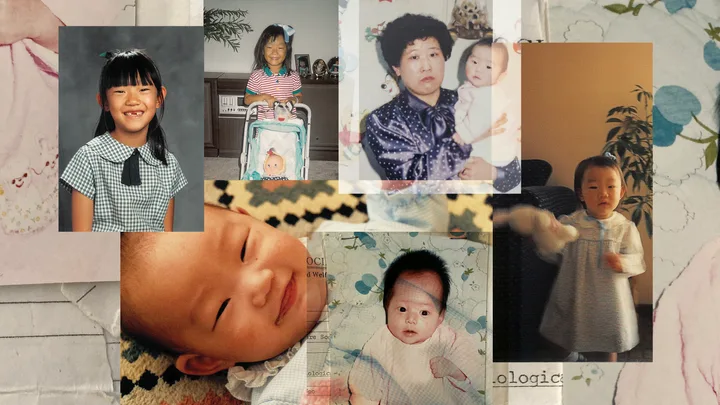
As a child, Anna* had a folder stuffed with documents, a biological jigsaw puzzle that pieced together who she was. “It had all of my adoption paperwork in it, including the story of why I was given up for adoption in South Korea,” she recalls. “It said my mum was a single mother and she couldn’t afford to keep me. She just wanted me to have a better life. Sometimes I’d go to my bedroom alone and read through the folder.”
Adopted by an Australian family as a baby in 1987, Anna grew up faintly curious about her identity but learnt to silence the questions. “I think I internalised the grief and pain so much that I shut off any connection with Korea,” she explains. “I thought, ‘I’m Australian, I don’t need to find [my birth family].’ And that’s how I handled it for most of my life.”
Decades later, Anna contracted Lyme disease, which spurred her to find out more about her family’s medical history. With tempered expectations, she reached out to the social worker agency offering search and reunion services. It set off a chain of events that upended her world.
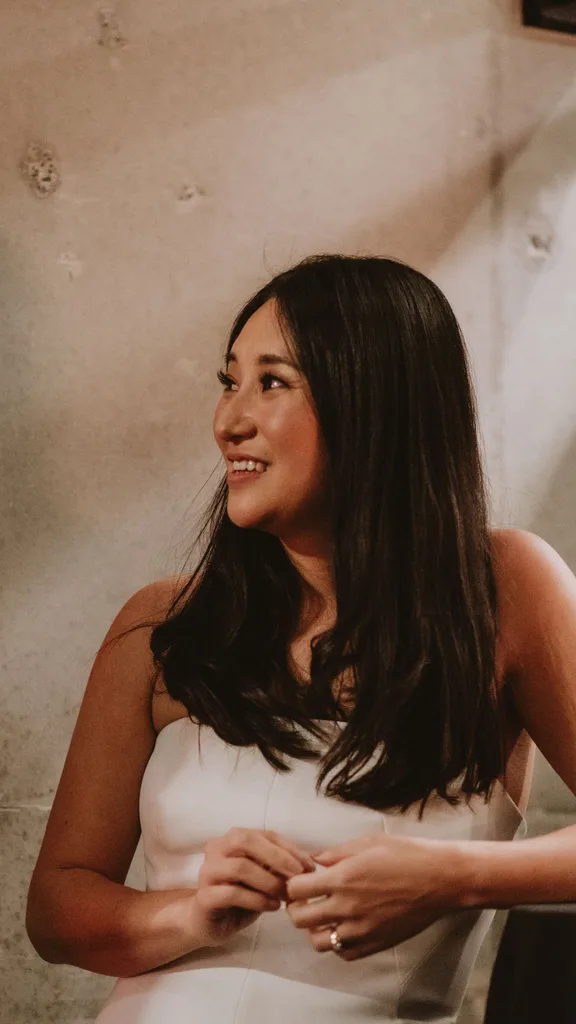
Anna visited her birth family in Korea last year, which she found healing but also heartbreaking, especially when it came time to leave. Photography Rachel Raymen/Starr Photography.
“Within a week or two, they’d found my birth mother and said that she wanted to have contact with me,” remembers Anna, now 38. “I received a letter from my mum that said she didn’t know I was sent to Australia, and that the doctor had forced her to put me up for adoption. Well actually, [the adoption agency] Eastern Social Welfare Society had translated the letter from Korean into English for me, and they incorrectly translated ‘doctor’ as ‘father’ – I suspect on purpose – so it was a while before I worked it all out.
My mum also said I have three older sisters, and that my dad and her were married when I was born. I realised then that what I’d been reading and telling myself my whole life wasn’t true, because in my paperwork it says my mum was a single mother who’d only been dating my dad, and that I had no siblings. It was the opposite of what my paperwork said.” Anna is one of a reported 3600 adoptees sent to Australia via Eastern Social Welfare Society (ESWS), South Korea’s largest adoption agency, since 1978.
Now, a dark history of illicit practices and systemic human rights violations is coming to light. Earlier this year, the initial findings of South Korea’s Truth and Reconciliation Commission, a three-year inquiry investigating Korea’s international adoption program, revealed government agencies and adoption organisations had falsified birth certificates, misrepresented children as orphans and failed to secure legal parental consent. (ESWS was contacted for this feature, but declined to comment.)
“According to a social worker who worked at Eastern Social Welfare Society at the time of my adoption, social workers would go to the hospitals and compete against other adoption agencies,” says Anna. “They would tell the doctors, ‘We’ll pay you X amount of dollars. We will give you cash for newborn babies.’ It was almost like a sales job: they had to hit certain numbers and find babies to reach targets. And where do you get babies to send overseas? Directly from the hospitals where the babies are born.”
The inquiry also confirmed allegations of coercion in the system. “In my case, the doctor knew my dad had reservations around me being female because he already had three girls,” says Anna. “So he really played on that, telling my dad, ‘You should be having a boy.’ My mum said that my dad verbally agreed to [my adoption]. She didn’t consent to it, and neither of them legally consented because there was no written consent. In Korean law, you need to have written consent to relinquish a child, and at the Truth and Reconciliation Commission this year, a lack of written consent was confirmed as a human rights violation.”
While processing the shock, upheaval and institutional betrayal, Anna has nurtured a relationship with her birth family, and last year she visited them in Korea. “Leaving them felt like I was being adopted all over again, like I was being forced to separate from them again,” she recalls.
“Except this time I was consciously aware. It was heartbreaking.” The unravelling of truths has shattered her birth mother. “The impact on her is profound and unimaginable,” shares Anna.
“Immediately after I was born, I was taken away from her. She didn’t get to see or hold me. Women were being taken advantage of during their most vulnerable time. When I found my mum, it was almost like she had 30 years of pain locked away and she hadn’t spoken about it to anybody. It felt like I opened up this massive wound for her. To this day, she blames herself that she didn’t protect me enough by saying ‘no’ or just grabbing me. She still struggles to see that she’s a victim in a much larger operation to traffic children, basically.” In stories of fraudulent intercountry adoption, three victims often emerge: the child, the birth parents and the adoptive family.
“My [adoptive] parents have found [the inquiry findings] really hard,” says Pippa*, 39, who was adopted from South Korea in 1986, and grew up in Melbourne.
“They thought they did everything right. They were told to pay a donation that they thought was for nappies and formula in orphanages; now they’re finding out that it could have been to pay off doctors. It really upset them. They’ve read articles suggesting [adoptive parents] were trying to buy us, and they weren’t.” For more than four years, Pippa has been trying to connect with her birth mum, a search she says is marked by “a big cloud and a big question mark”.
One thing she knows is that her paperwork is filled with discrepancies, and that her birth certificate was likely fabricated. “I used to be happy with the unknown,” she says. “I never wanted to look for my birth family until I had my son seven years ago. And then I thought, ‘Wow, this is my first blood relative.’ It made me wonder more about my bloodline and my birth family history. I looked at my son and thought, ‘You’ve got my nose, you’ve got your dad’s eyes,’ that sort of thing … We call our children DoKADs: descendants of Korean adoptees. So he’s a little DoKAD, but he’s going to grow up wanting to know his origins. It’s intergenerational.”
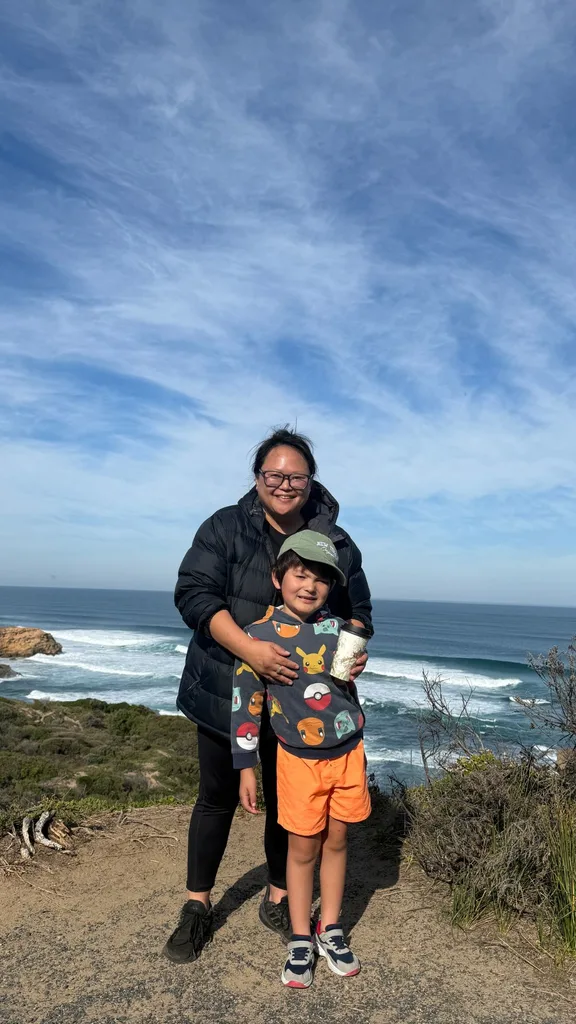
Pippa today, with her seven-year-old son.
The Korean word sosokgam describes a sense of belonging, a deep and inexplicable yearning for home that resonates with many intercountry adoptees. When they discover their story has been steeped in lies, a new layer of existential insecurity rises to the surface. Samara, an intercountry adoptee, travelled to South Korea last year, where she discovered that she was not an orphan. Her paperwork had been falsified and her birth mother never consented to her Australian adoption.
“It really changed everything for me. I didn’t know who I was,” says Samara, who is doing a PhD on South Korean adoption to Australia at Flinders University. “To find out the very foundations of your life – your name, your birthday, your family, the reasons for your adoption – the pillars of your identity … everything you had trusted, everything you had been told, everything you had once believed was built on a lie – [it] was world-shattering. The discovery that my adoption was not a tragic circumstance, but part of a deliberate, calculated system designed to supply children to Western nations for profit, shattered everything I thought I knew about myself. The personal, cultural and existential grief, anger, loss and betrayal are immense and remain ever-present.” For Anna, the emotional heaviness has been consuming.
“There was a time when I didn’t think I’d ever be able to … smile or feel any joy or passion in my life again because I was just so devastated at hearing the scale and systemic nature of this issue,” she says. “I had no faith in humanity. I didn’t trust any government systems. I almost didn’t trust anything in my life.” Meeting her Korean family was healing, and so too was connecting with other intercountry adoptees, including Samara and Pippa, via online support groups. “Until now, I’ve never really felt that anybody truly understands how I feel or what I’ve gone through,” says Anna.
“But we truly can understand each other’s pain, desires – everything. It’s such a bizarre feeling.” Pippa adds, “Growing up, I was the only one adopted, and I didn’t really think I belonged. There was just something missing. But when you’ve connected with people who’ve grown up the same way, you realise you weren’t alone … It’s like long-lost sisters you never knew you had. We speak every day.” Now, the three women (together with a fourth, Blossom, who chose not to be interviewed) have formed grassroots group KADs Connect. They’re advocating for truth and accountability for the Korean adoptee community in Australia, and are lobbying for a national inquiry into the state’s role in unlawful and harmful intercountry adoption practices. “I think a public acknowledgement and inquiry is vital,” says Samara. “Australia carries a long and painful history of forced adoptions: the establishment of global commercial adoption coincided with the legislative end of the forced adoption era and the Stolen Generations. But despite national apologies and inquiries, we want to understand why similar abuses were permitted to occur within Australia’s intercountry adoption program.”
The Australian Government says it’s committed to investigating past wrongdoings. “Labor understands the lifelong consequences of poor adoption practices for intercountry adoptees and their families and the need for a thorough and transparent investigation,” says the Minister for Social Services, Tanya Plibersek.
“We recognise this is a particularly distressing time for Australians who are adopted from Korea. The government is considering the best approach to the investigation and the views that have been put forward by people affected by intercountry adoption.”
Meanwhile, in early October, the South Korean president offered an apology to adoptees and their families affected by the scandal, though many worry it is merely lip service. “The South Korean president’s apology is a positive step, but words alone are not enough,” says Anna, on behalf of KADs Connect. “This isn’t the first apology, and adoptees are still waiting for action. Delivered via Facebook, in Korean, with no adoptee representatives present, it fails to fully acknowledge the state’s role in the adoption system.”
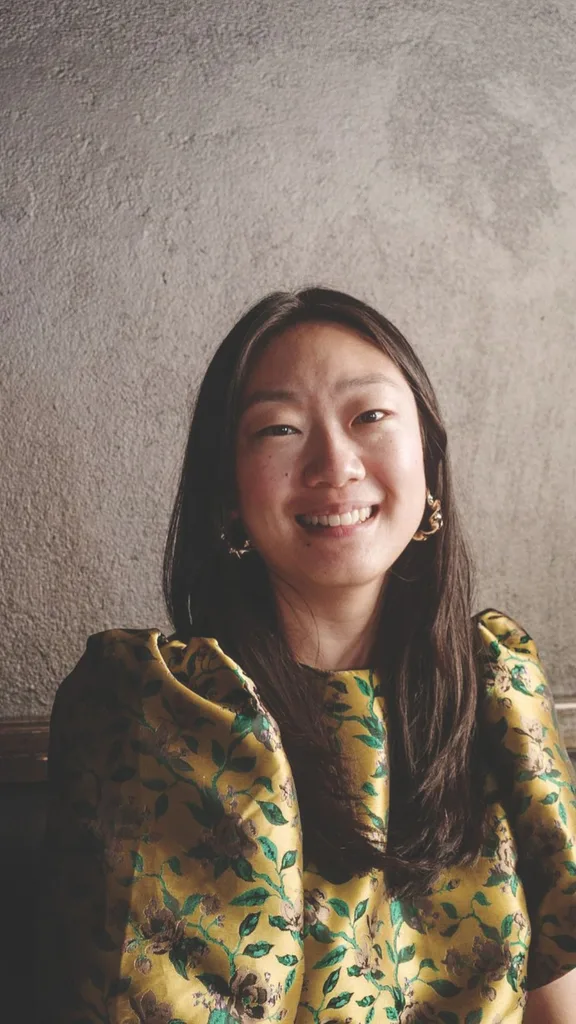
Samara is doing a PhD on South Korean adoption to Australia at Flinders University. Photography Rachel Raymen/Starr Photography.
Fraudulent or not, intercountry adoption is mired in complexities, often flattened down to sugar-coated portrayals of celebrities and their multi-racial broods. “Historically, intercountry adoption has been framed as an act of humanitarianism – designed to ‘rescue’ children,” says Samara.
“This framing casts adoptees as pitiful children, their first families as incapable, and adoptive parents as saviours offering a ‘better life’. But these assumptions erase and hinder any complex conversation about adoption. They ignore and self- congratulate adoptive countries – like Australia and the US – who had a significant role in creating the traumas, violence and vulnerabilities in the countries we supposedly needed rescuing from. And they hide the dark reality that many adoption agencies … were designed to remove and ‘launder’ children from vulnerable women through ostensibly ‘legal’ means.”
According to Damon Martin, social worker and deputy CEO of International Social Service Australia, the ethics of intercountry adoption are muddied by financial incentives.
“When you’re adding money to the process of adopting children, it opens up all these loopholes for corrupt activity to occur,” he explains. “I’ve been working with intercountry adoptees for 20 years and I’ve seen too many examples of poor, illicit and illegal practices. The thing is, it can be really difficult for any receiving country to assess whether there’s been illegal practices, because the dossiers [from the countries of origin] tend to look legitimate.”
He points out that today, there are more than 10,000 intercountry adoptees in Australia and many have no cause to question their past. But with historical, high-profile examples of illegal intercountry adoptions involving Australia – including the Julie Chu child-trafficking ring from Taiwan in the 1980s, the Preet Mandir scandal in India in the noughties, and now the unfolding South Korea violations – more illicit cases are likely to emerge.
Presently, Australia facilitates adoptions with Chile, Colombia, India, Taiwan, Thailand and South Korea (following the Truth and Reconciliation Commission, private adoptions through agencies like ESWS have been halted in Korea, with the state taking responsibility).
“Although the Korean program might start to wind up now, the intercountry adoption industry will continue to adapt and shift by sourcing children from other countries and exploiting vulnerabilities,” says Samara.
“We’re witnessing this now in Ukraine and at borders in countries going through social upheaval, with adoption agencies pressuring families to relinquish their children. We’re also witnessing the rise of international surrogacy … which remains almost entirely unregulated. You can see the same myths, assumptions [and] systemic vulnerabilities play out. This is why we really wanted to share our stories and call for an inquiry. We want answers but we also want to ensure this doesn’t happen to anyone else.”
Now, the women are connecting with what’s been lost and reshaping what comes next, together. “None of us can change what happened to us,” says Anna. “We’re all aware of that. But if we can change it for the future – for future adoptees and for our descendants – that’s what is most important.”
 Transnational /Transcultural Adoption Project