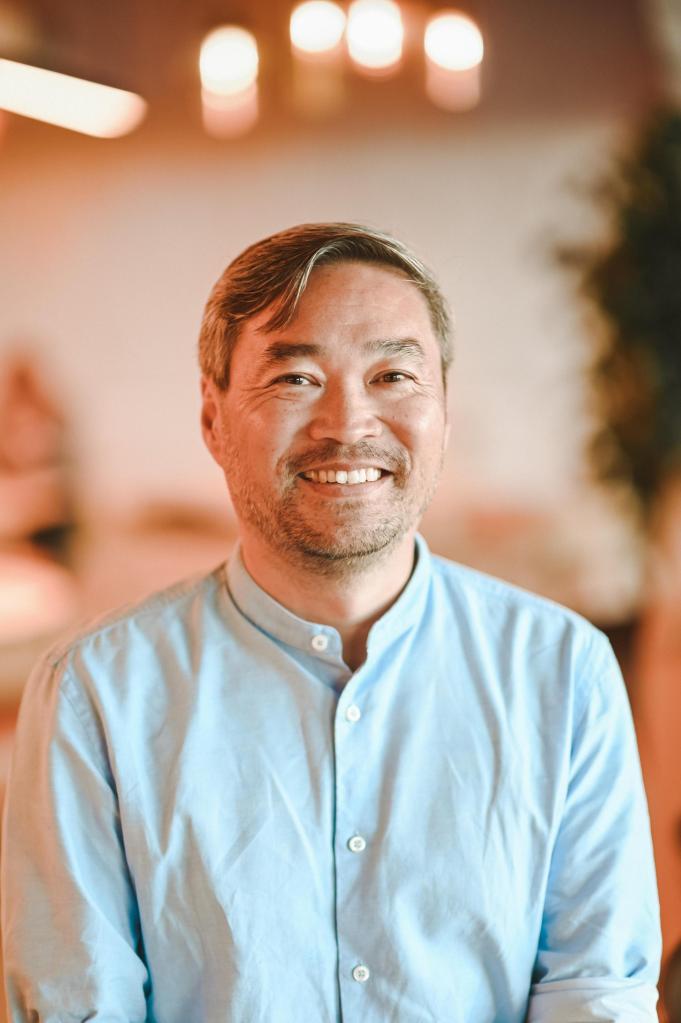
Anders Riel Müller / Courtesy of Anders Riel Müller
The renewal of the Truth and Reconciliation Commission (TRC) for a third mandate on Jan. 29 offers a new opportunity to address the unresolved adoption cases that have shaped so many lives. While I welcome TRC3, my experience with TRC2 has taught me to approach this moment with caution. We must acknowledge the limitations of past TRC investigations — both in uncovering historical truth and in delivering paths toward reconciliation and justice.
I am one of the 56 overseas adoptees whose case the TRC2 confirmed as a human rights violation last May in Korea. For decades, I lived with the knowledge that my separation from my family and country was not just tragic — it was unlawful and morally wrong. The TRC’s recognition of my case was validating, but also deeply unfulfilling.
The commission’s findings are a long-overdue acknowledgment of the injustices embedded in Korea’s overseas adoption system. However, they represent only the tip of the iceberg. Over 300 cases submitted to the TRC remain unresolved, and tens of thousands of adoptees — many of whom lack documentation — are excluded from this reckoning. Its recommendations, while symbolically important, fall short of delivering meaningful justice. As we anticipate another round of TRC investigations, it is important to address some of the shortcomings of the first investigation.
Insufficient scope of TRC investigations
The TRC’s reliance on documentation to verify harm presents a cruel irony. The very system under investigation was built on falsifying, fabricating and destroying those documents. Many adoptees were assigned fictitious family origins like “Hanyang” to classify them as orphans — even when they had living parents. Records were altered to obscure family relations or destroyed entirely to facilitate export. To require documentation as proof of injustice is to demand evidence from victims of a system designed to eliminate it.
This approach excludes the majority of adoptees from recognition and redress, not because the injustices committed against them are less valid but because the state ensured it would be undocumented. Justice must not be contingent on paperwork. It must be grounded in oral testimony, systemic patterns and historical context. Otherwise, the TRC risks reinforcing the very violence it was meant to expose.
Another weakness of the TRC’s decision in the first 56 cases has become cruelly clear to us: They do not address the structural violence that rendered us socially illegible, nor do they offer pathways for restoration. Some of us have tried to file lawsuits against the Korean government, but the lawyers are unsure how to pursue them. Some have instead tried to file financial compensation claims against the government. We are still waiting for the decisions on these claims. This uncertainty around the consequences of the TRC decision shows the limitations of its recommendations.
At the same time, legal action or financial compensation do not equal justice. They are tools to bring adoption into the spotlight and a pressure point for working on politicians. They cannot repair the rupture of being severed from one’s family, culture and identity. Lawsuits and financial compensation cannot restore the years lost to disorientation, cultural isolation and the labor of reconstructing a history that the state itself worked to erase. They are tiny bandages on thousands of gaping wounds. What we need is political and legislative action that address the injustices of the overseas adoption system.
Reframing overseas adoption as banishment
To understand the depth of the harm done, we must reframe overseas adoption not as a humanitarian gesture or necessity, but as a form of banishment. Under the 1392-1910 Joseon Dynasty’s penal code, banishment was considered one of the harshest punishments. It meant being stripped of one’s place in society, severed from family, community and identity and sent to end one’s life in a distant territory. It was a form of social death.
Overseas adoption mirrors this punishment, yet in many ways is even more severe. Those banished under Joseon law may have lost their title, status and home, but they retained their names, histories and origins. Adoptees, by contrast, were not only removed from our families and homeland — we had our names changed, our identities falsified, our histories erased and our citizenship revoked. The system didn’t just sever us from our roots; it actively worked to make those roots irrecoverable.
We were reclassified as orphans, scattered across the globe and expected to assimilate into new identities while being denied access to our original ones. The violence was not just in the separation but in the bureaucratic machinery designed to make rejoining nearly impossible. This is not benevolence — it is punishment for people who committed no crime. It demands accountability, not pity. I am unsure whether another round of TRC investigations will bring about justice unless accompanied by political action.
Restorative justice as a possible way forward
Restorative justice must be proportional to the harm done. It must be reconstructive, not only financial or symbolic. This means being willing to restore South Korean citizenship to all overseas adoptees at the expense of the government, regardless of documentation status. It means opening all adoption records, removing barriers to access and supporting efforts to trace families. It means financial support for returnees in housing, language education and employment assistance, along with compensation for families who were coerced or misled.
The South Korean government must also provide archival justice and take responsibility for the records it manipulated and concealed. Mechanisms for verification must not rely solely on documentation. Oral histories, community corroboration and adoptee-led investigations must be recognized as valid pathways to truth. Public education campaigns, national memorials and adoptee and family-led forums should be part of reparations. Most importantly, adoptees and their families must be included in shaping future redress policy. We are not voiceless — we are evidence. Our insight is essential to crafting policies that are ethical, effective and reparative.
In Korean folklore, “gwisin” are spirits who linger because of unfinished business. Overseas adoptees are much like gwisin. We were severed from our families, stripped of our names and histories and rendered socially dead. Yet we persist in returning to Korea not out of vengeance, but out of necessity. We are the reminders of a system that commodified children and exported citizens for profit under the guise of humanitarianism. Our presence unsettles the national conscience because it forces Korea to confront what it tried to conceal.
Unlike the gwisin of folklore, we do not seek rituals to send us away. We seek recognition, accountability and repair. Our unfinished business is not spiritual — it is historical, legal and moral. Korea cannot move forward until it reckons with the lives it displaced, the families it fractured and the truths it buried. We are not ghosts, but until our rights are restored and our histories reclaimed, we will remain in the margins, haunting Korea’s consciousness not out of malice, but seeking justice.
Anders Riel Müller (Song Yeon-jun) was adopted from Korea to Denmark in 1980 at the age of 3. He is an associate professor at the University of Stavanger in Norway, where his research and teaching is focused on the cultural political economy of sustainability and justice in Scandinavia and South Korea.